
Al Maktoum International Airport Targets Queue-Free Security Ahead of 2032 Phase
The AED 128 billion aviation project is planned to combine biometric technology with a future capacity of up to 260 million passengers annually.
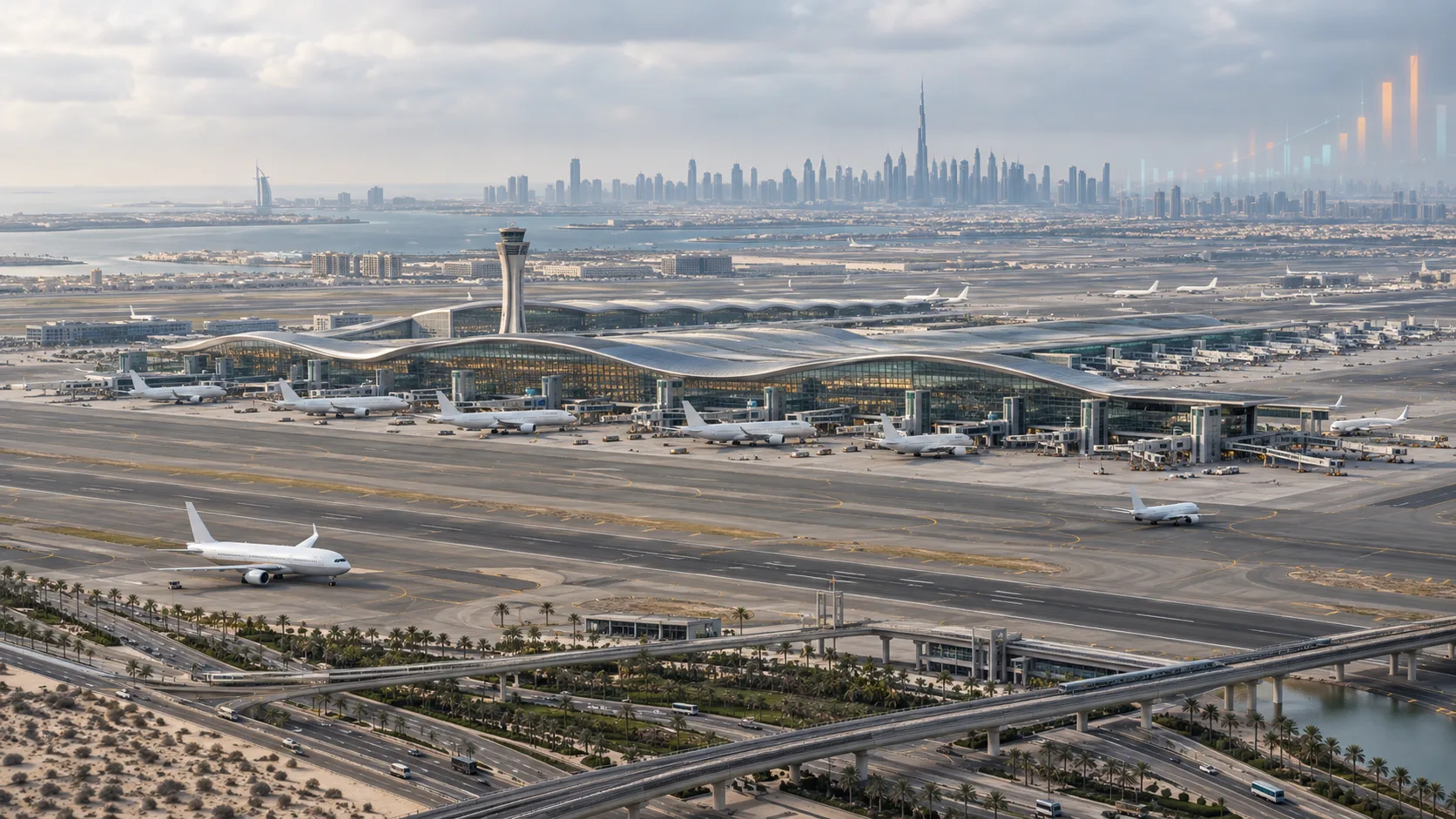
Al Maktoum International Airport is being developed as Dubai’s future major aviation hub, with its first major phase targeted for operations in 2032. Its planned queue-free security model could strengthen Dubai South’s long-term appeal for hospitality, logistics and mixed-use investment.
What this means for investors
For investors assessing Dubai South and adjacent growth areas, the airport’s planned passenger experience is a potentially important qualitative signal.
Al Maktoum International Airport is being developed as Dubai’s future major aviation hub, with its first major phase targeted to begin operations in 2032 and an ultimate planned capacity of up to 260 million passengers annually. The AED 128 billion expansion is also intended to incorporate advanced aviation technologies, including biometric and unobtrusive security concepts. Secondary reporting describes the future passenger journey as a queue-free security experience.
Executive Summary
The airport’s planned security model places passenger experience alongside capacity at the centre of Dubai’s next aviation platform. If delivered as intended, reduced friction at security could give Al Maktoum International Airport an additional point of differentiation and reinforce the strategic relevance of the wider Dubai South development environment.
Confirmed Development Facts
- Al Maktoum International Airport is being developed as Dubai’s future major aviation hub.
- Its first major phase is targeted to begin operations in 2032.
- The airport’s ultimate planned capacity is up to 260 million passengers annually.
- The expansion has an approved investment value of AED 128 billion.
- Plans include advanced aviation technologies and biometric or unobtrusive security concepts.
- Secondary reporting characterises the intended passenger process as queue-free security, supported by AI- and biometric-enabled concepts.
Market Significance
For Dubai, the project represents more than an increase in aviation capacity. Its combination of scale and a technology-led passenger journey points to an infrastructure strategy focused on throughput, convenience and international competitiveness. That positioning is relevant across the wider GCC, where airports increasingly serve as anchors for commercial districts, hospitality clusters, logistics platforms and mixed-use urban expansion.
A queue-free security proposition could strengthen the airport’s lifestyle value as well as its transport function. The market implication is not that every surrounding asset will benefit equally, but that locations able to connect efficiently with the airport may develop a stronger long-term proposition for occupiers, visitors and businesses.
Investor Perspective
For investors assessing Dubai South and adjacent growth areas, the airport’s planned passenger experience is a potentially important qualitative signal. Frictionless processing could support the appeal of nearby hospitality, serviced accommodation, retail and business uses by making proximity to the aviation hub more valuable in day-to-day experience, rather than only on a map.
The timing also matters. With the first major phase targeted for 2032, the investment case is linked to a long development horizon rather than an immediate operating uplift. Investors should therefore distinguish between current accessibility, interim infrastructure delivery and the eventual airport proposition. The planned capacity and security technology indicate substantial ambition, but they do not by themselves establish future occupancy, rental performance or asset pricing.
Sources & methodology
How this report was built
This is an editorial analysis. It sets out our reading of the market rather than a computed dataset.
Data coverage
Any figures mentioned are attributed in the text to the source they came from.
Article scope
All property types
Transparency notes
The queue-free security description is supported by secondary reporting and reflects an intended future operating model, not demonstrated airport performance. The 2032 date is a targeted start for the first major phase, while up to 260 million is the airport’s ultimate planned capacity; neither should be read as current operating data.
Related stories
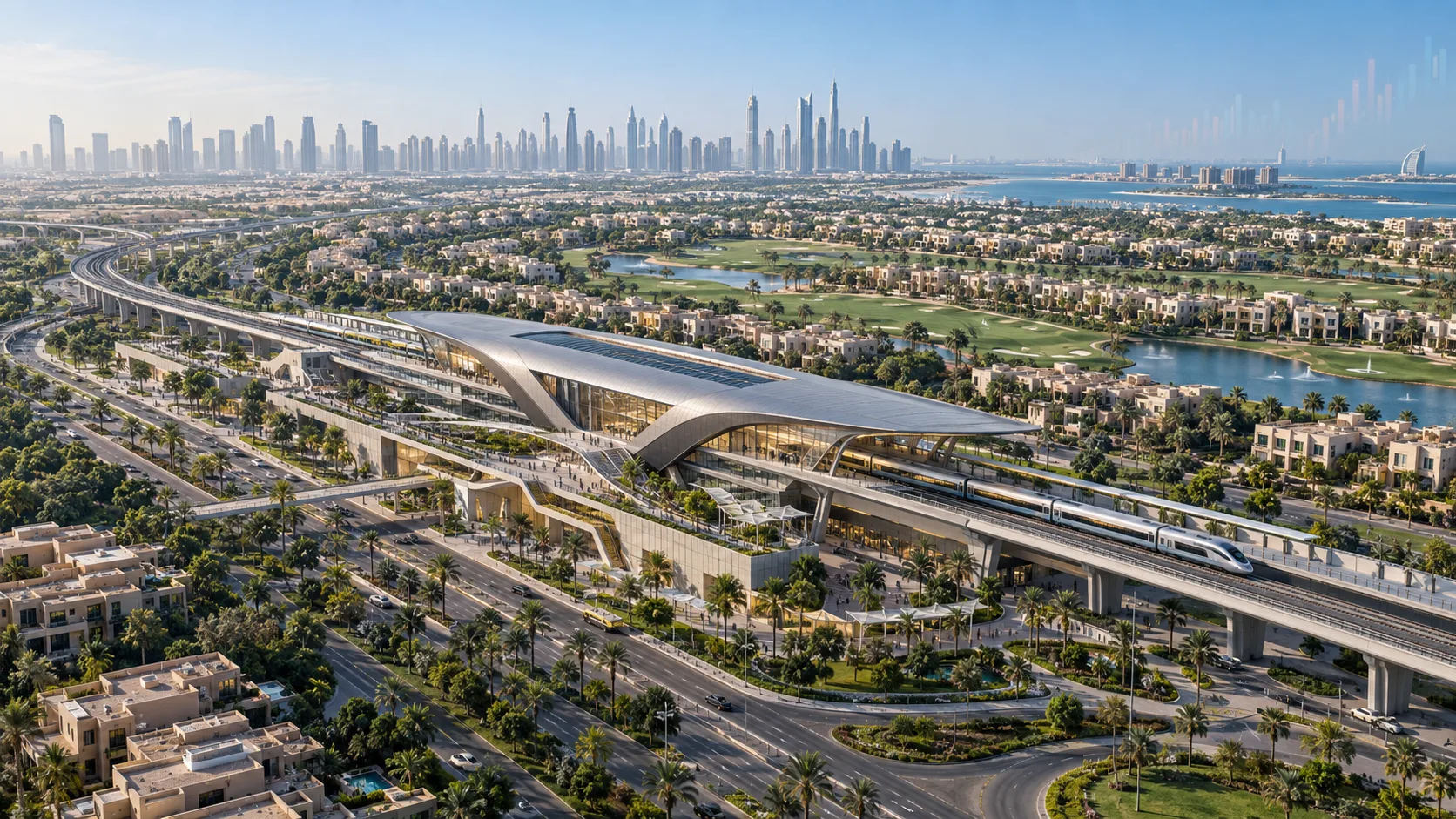
Etihad Rail Sets September 30, 2026 Opening for Dubai Passenger Station in Jumeirah Golf Estates
Etihad Rail has scheduled the opening of its Dubai passenger station in Jumeirah Golf Estates for September 30, 2026. The planned Abu Dhabi-Dubai-Fujairah connection adds a new intercity mobility layer with potential implications for accessibility, development activity and investment analysis around the station.
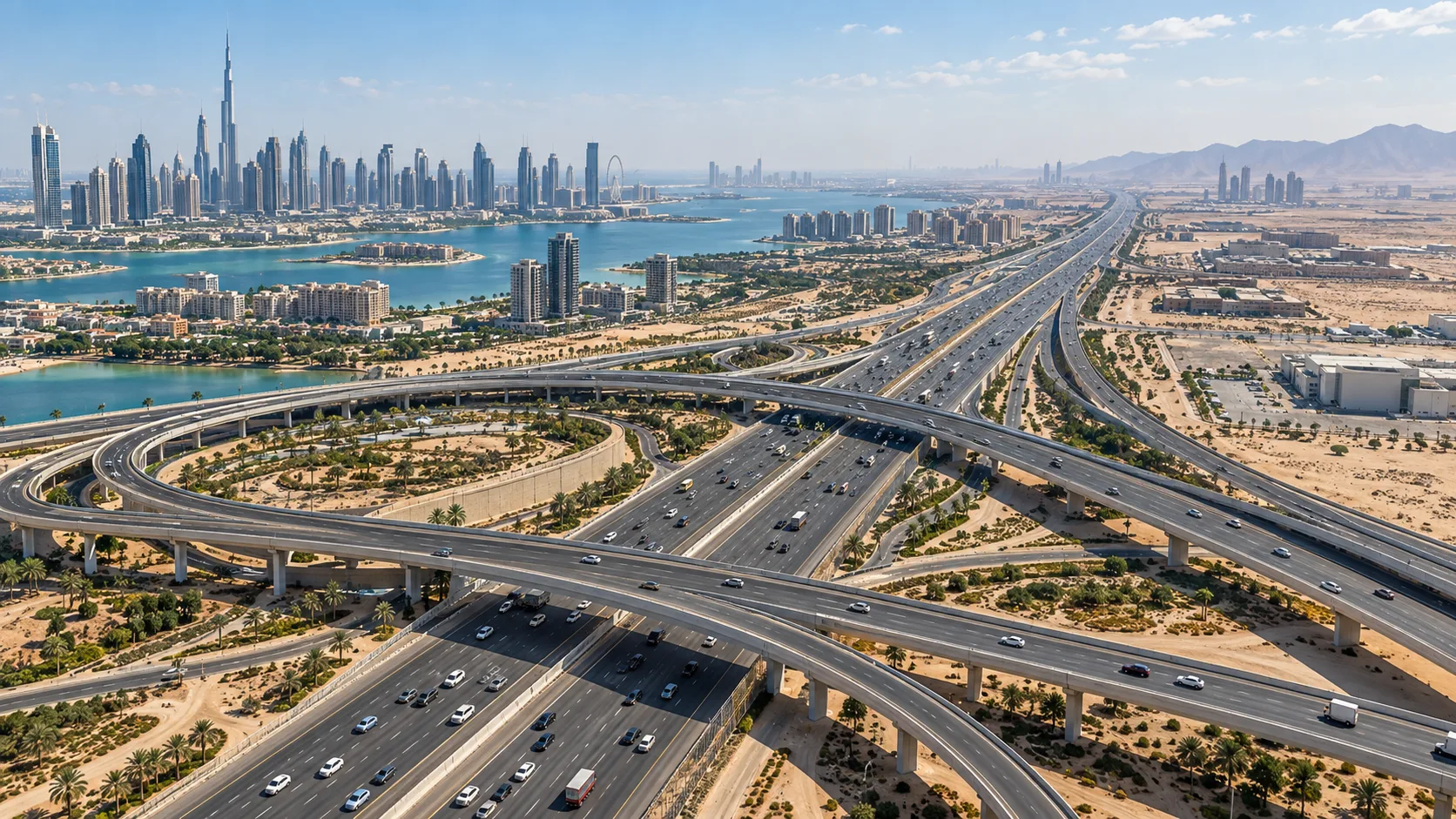
Dubai Approves Approximately 80-Kilometre Fourth Road Corridor with AED 3.5 Billion First Phase
Sheikh Hamdan bin Mohammed bin Rashid Al Maktoum has approved implementation of Dubai’s fourth strategic road corridor, an approximately 80-kilometre route featuring 12 lanes in both directions, 72 bridges and 17 tunnels. Its AED 3.5 billion first phase is expected to cut travel time between Al Shanouf Street and Dubai-Al Ain Road from 35 minutes to 14 minutes.
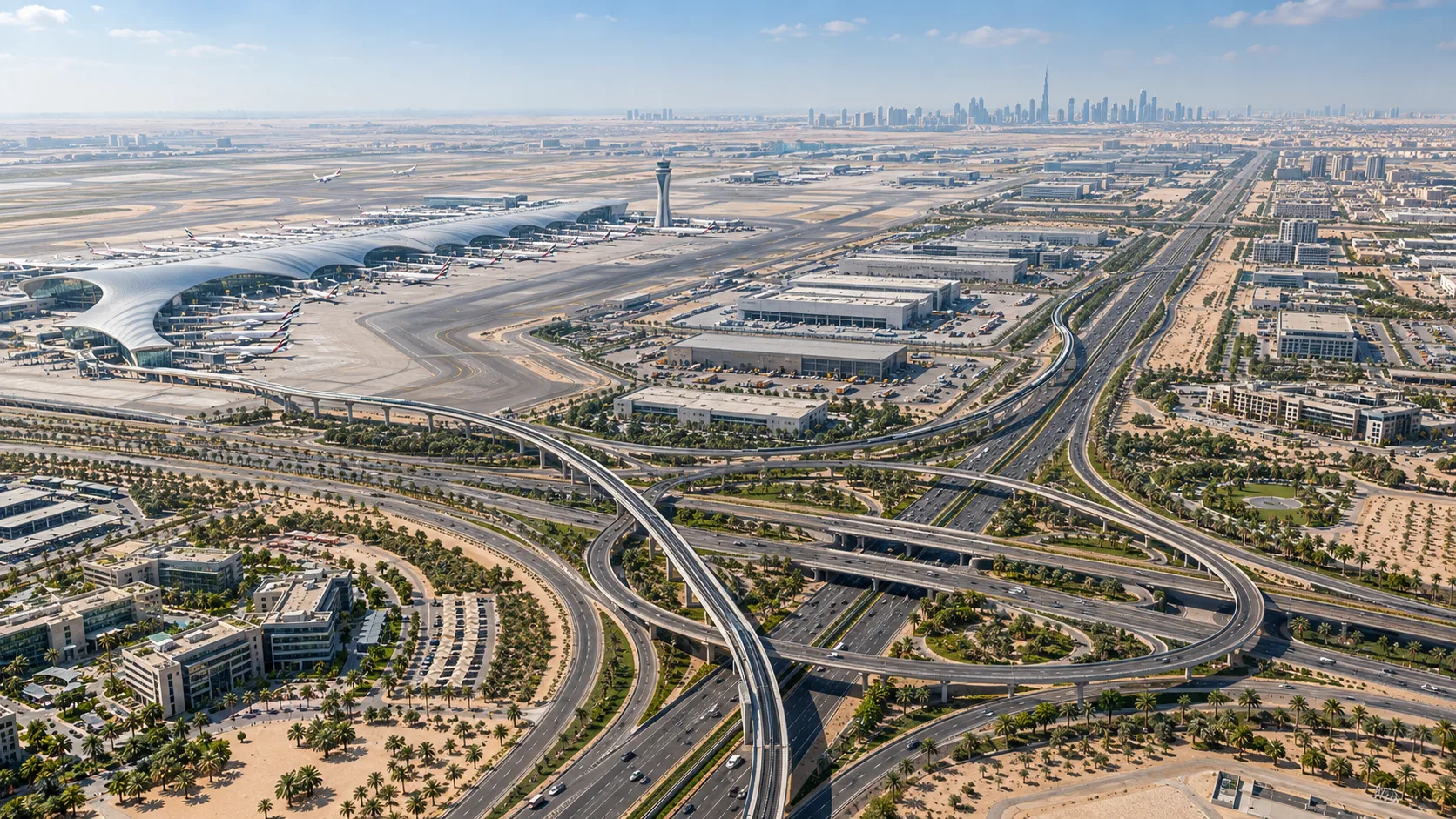
Dubai RTA Reviews Road and Public Transport Links to Al Maktoum International Airport
Dubai’s Roads and Transport Authority and Dubai Airports are reviewing future road and public transport projects serving Al Maktoum International Airport and Dubai South, reinforcing connectivity as a key factor in the area’s long-term development outlook.
HOLM Developments Plans 140,000-Square-Metre, More Than $250 Million Project on Ambassadori Island in Batumi
HOLM Developments has signed an international investment and development agreement for a planned multifunctional complex covering 140,000 square metres on Ambassadori Island in Batumi, with announced investment exceeding $250 million.