
Dubai Approves Approximately 80-Kilometre Fourth Road Corridor with AED 3.5 Billion First Phase
The cross-emirate corridor will link Al Faya Street in Abu Dhabi with Al Shanouf Street in Sharjah through Dubai, adding capacity to the regional transport network.
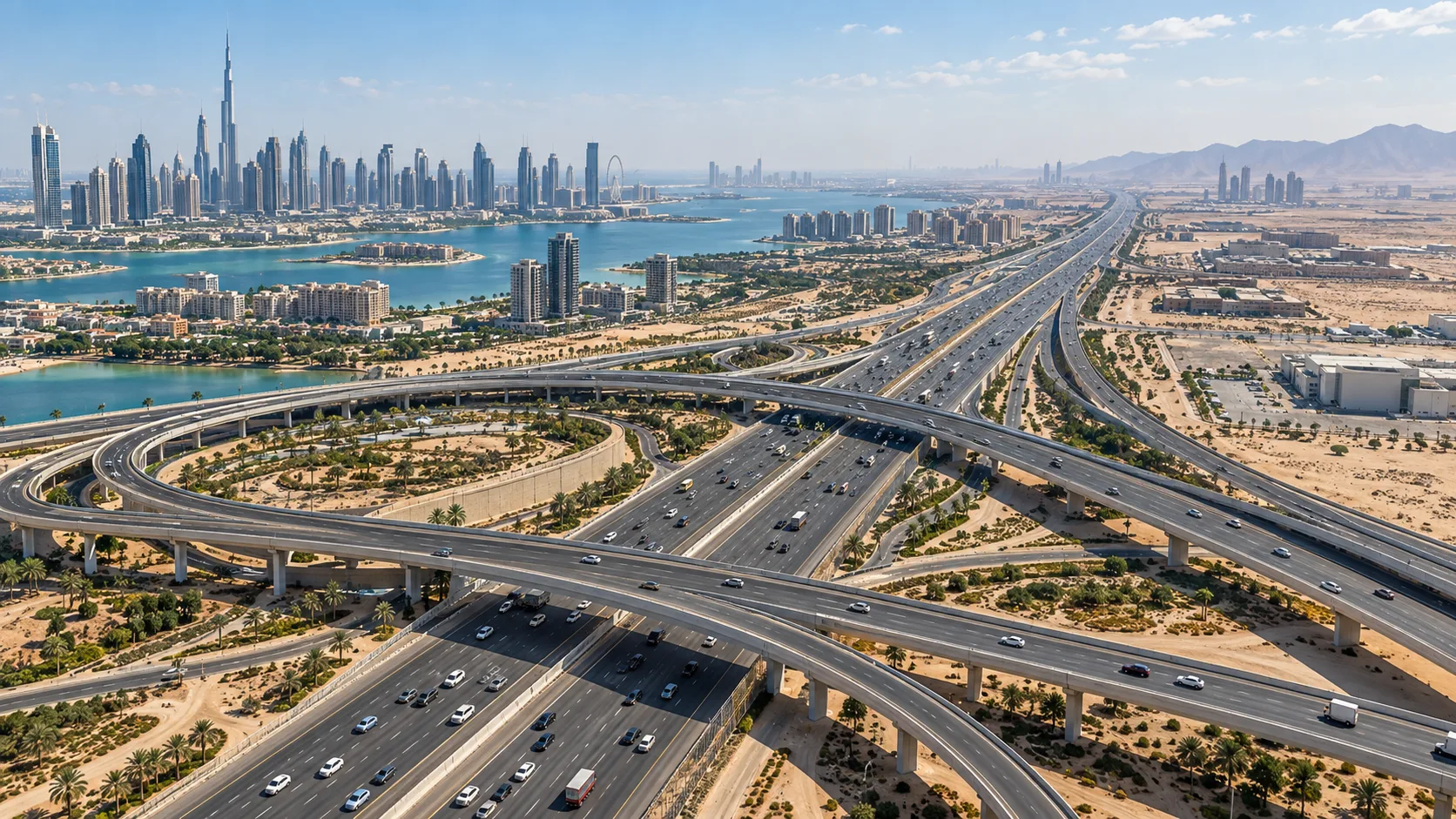
Sheikh Hamdan bin Mohammed bin Rashid Al Maktoum has approved implementation of Dubai’s fourth strategic road corridor, an approximately 80-kilometre route featuring 12 lanes in both directions, 72 bridges and 17 tunnels. Its AED 3.5 billion first phase is expected to cut travel time between Al Shanouf Street and Dubai-Al Ain Road from 35 minutes to 14 minutes.
What this means for investors
Investors assessing the route should focus first on connectivity evidence rather than headline proximity. Key questions include whether a property sits near a confirmed access point, how the first phase changes its connection to Dubai-Al Ain Road, and whether the asset benefits from links to the airport or Etihad Rail network.
Sheikh Hamdan bin Mohammed bin Rashid Al Maktoum has approved implementation of Dubai’s fourth strategic road corridor, an approximately 80-kilometre route running from Al Faya Street in Abu Dhabi to Al Shanouf Street in Sharjah through Dubai. The first phase, estimated at AED 3.5 billion, places cross-emirate connectivity and transport capacity at the centre of the next infrastructure cycle, with potential implications for development activity and property accessibility along the route.
Executive Summary
The corridor is planned as a major addition to Dubai’s strategic road network, linking the neighbouring emirates while connecting with Al Maktoum International Airport and the Etihad Rail network. Its first phase is expected to reduce the journey between Al Shanouf Street and Dubai-Al Ain Road from 35 minutes to 14 minutes, materially changing the travel-time profile of locations served by the route.
Confirmed Development Facts
- Sheikh Hamdan bin Mohammed bin Rashid Al Maktoum approved implementation of Dubai’s fourth strategic road corridor.
- The corridor will extend approximately 80 kilometres from Al Faya Street in Abu Dhabi to Al Shanouf Street in Sharjah, passing through Dubai.
- The planned infrastructure includes 12 lanes in both directions, 72 bridges, 17 tunnels and 45 stormwater drainage culverts.
- The first phase will run from Al Shanouf Street in Sharjah to Dubai-Al Ain Road and is estimated to cost AED 3.5 billion.
- The first phase is expected to reduce travel time from 35 minutes to 14 minutes, a 60% reduction, and will have capacity for up to 24,000 vehicles per hour in both directions.
- The corridor will connect with Al Maktoum International Airport and the Etihad Rail network.
Market Significance
For the GCC development market, the corridor is significant because it frames mobility as a regional platform rather than a single-emirate improvement. Faster access between Sharjah, Dubai and Abu Dhabi could expand the practical reach of employment, logistics, airport and commercial nodes, although the property effect will depend on the final alignment, interchange locations and delivery sequence.
The combination of road, airport and rail connectivity also strengthens the strategic case for land and development planning around well-served transport interfaces. Areas that gain reliable access may become more visible to developers and occupiers, while locations closest to major infrastructure will require careful planning around traffic, noise and construction impacts. The announcement therefore points to a potential redistribution of accessibility, not an automatic increase in value for every nearby parcel.
Investor Perspective
Investors assessing the route should focus first on connectivity evidence rather than headline proximity. Key questions include whether a property sits near a confirmed access point, how the first phase changes its connection to Dubai-Al Ain Road, and whether the asset benefits from links to the airport or Etihad Rail network. These factors could influence tenant reach, commuting convenience and the viability of future residential, industrial or mixed-use development.
Timing will also matter. The first phase has been approved for implementation, but no completion date has been provided. The corridor is therefore a planning and monitoring theme rather than a basis for assuming immediate operational benefits. Investors comparing opportunities across Dubai, Sharjah and Abu Dhabi should track subsequent design, land-use and delivery updates before treating projected travel-time gains as realised market conditions.
Sources & methodology
How this report was built
This is an editorial analysis. It sets out our reading of the market rather than a computed dataset.
Data coverage
Any figures mentioned are attributed in the text to the source they came from.
Article scope
All property types
Transparency notes
The approximately 80-kilometre corridor length and capacity of up to 24,000 vehicles per hour retain their stated qualifiers. The AED 3.5 billion figure is an estimated cost for the first phase. No completion date, detailed alignment or confirmed property-development beneficiaries were provided in the announcement.
Related stories
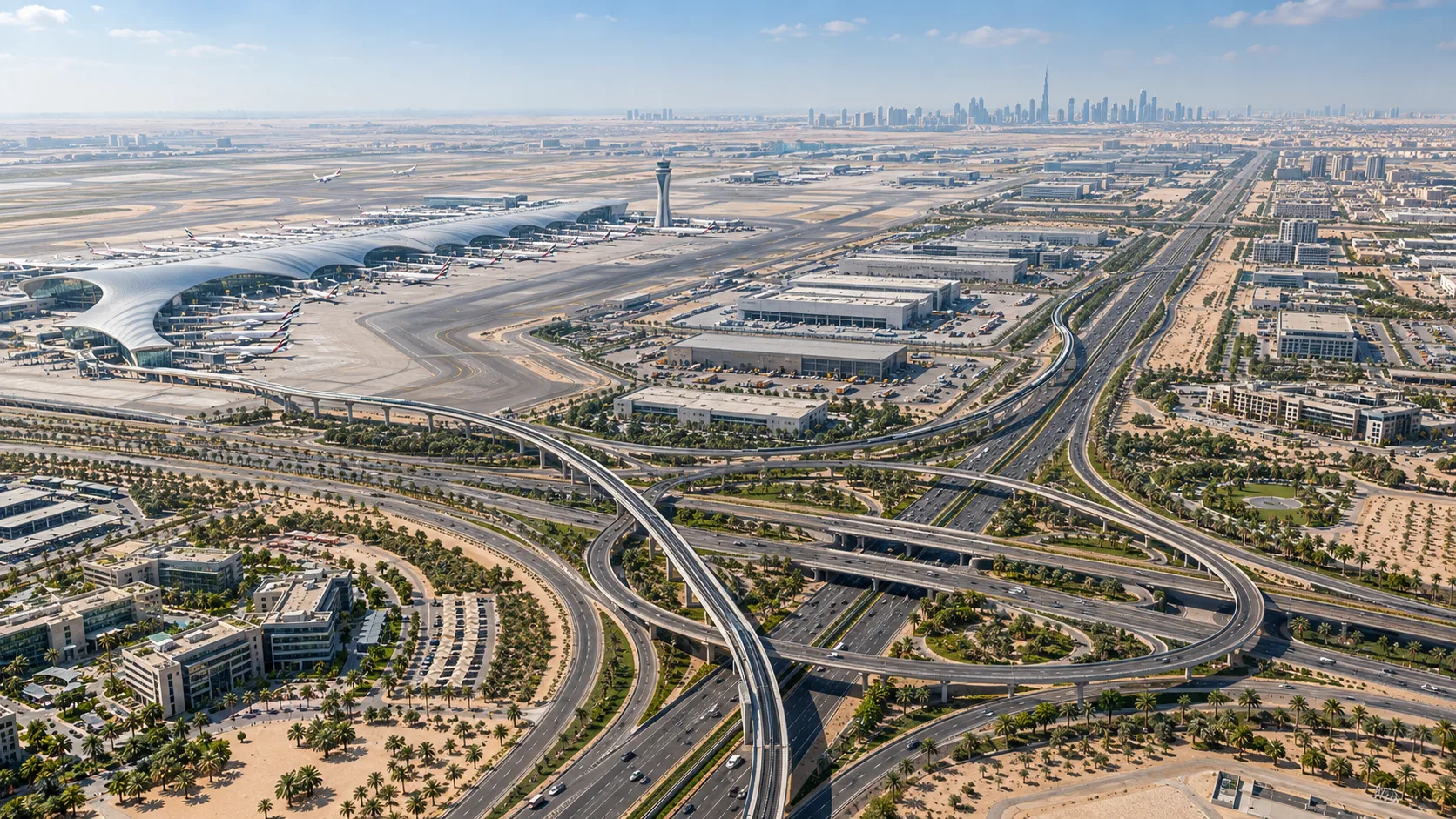
Dubai RTA Reviews Road and Public Transport Links to Al Maktoum International Airport
Dubai’s Roads and Transport Authority and Dubai Airports are reviewing future road and public transport projects serving Al Maktoum International Airport and Dubai South, reinforcing connectivity as a key factor in the area’s long-term development outlook.

Dubai Mortgage Refinancing Enquiries Rise 2.5 Times as Property Purchase Volumes Ease
Dubai’s mortgage market is showing a marked shift in borrower activity. Mortgage refinancing and equity-release enquiries grew 2.5 times year on year, while mortgage-backed property purchase volumes declined approximately 35% in the second quarter of 2026 compared with the same period of 2025.
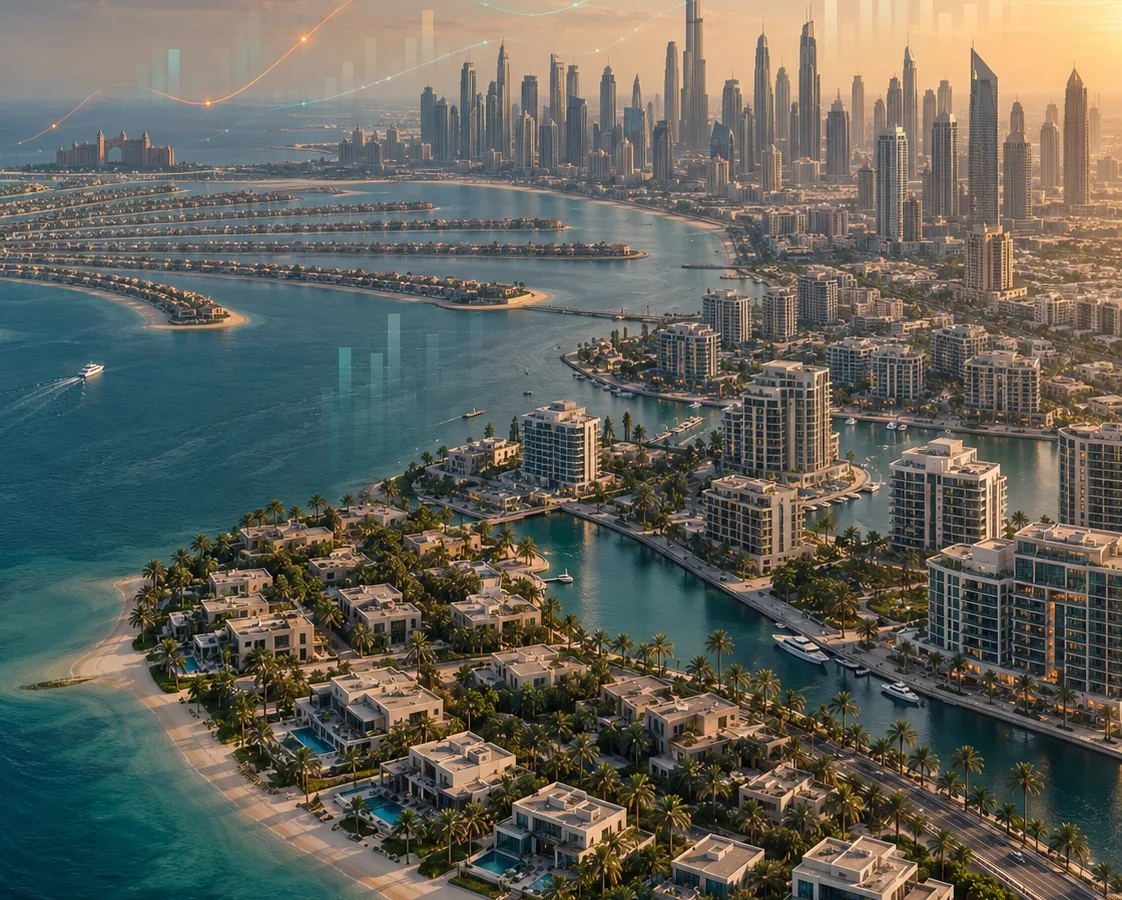
Emaar Founder Mohamed Alabbar Sees Approximately 5% to 10% Dubai Property Price Adjustment by 2027
Mohamed Alabbar, founder of Emaar Properties, said Dubai property prices could adjust by approximately 5% to 10% as significant new supply enters the market by 2027. The outlook gives developers, investors and buyers a market-timing signal as the emirate prepares for a potentially broader inventory cycle.
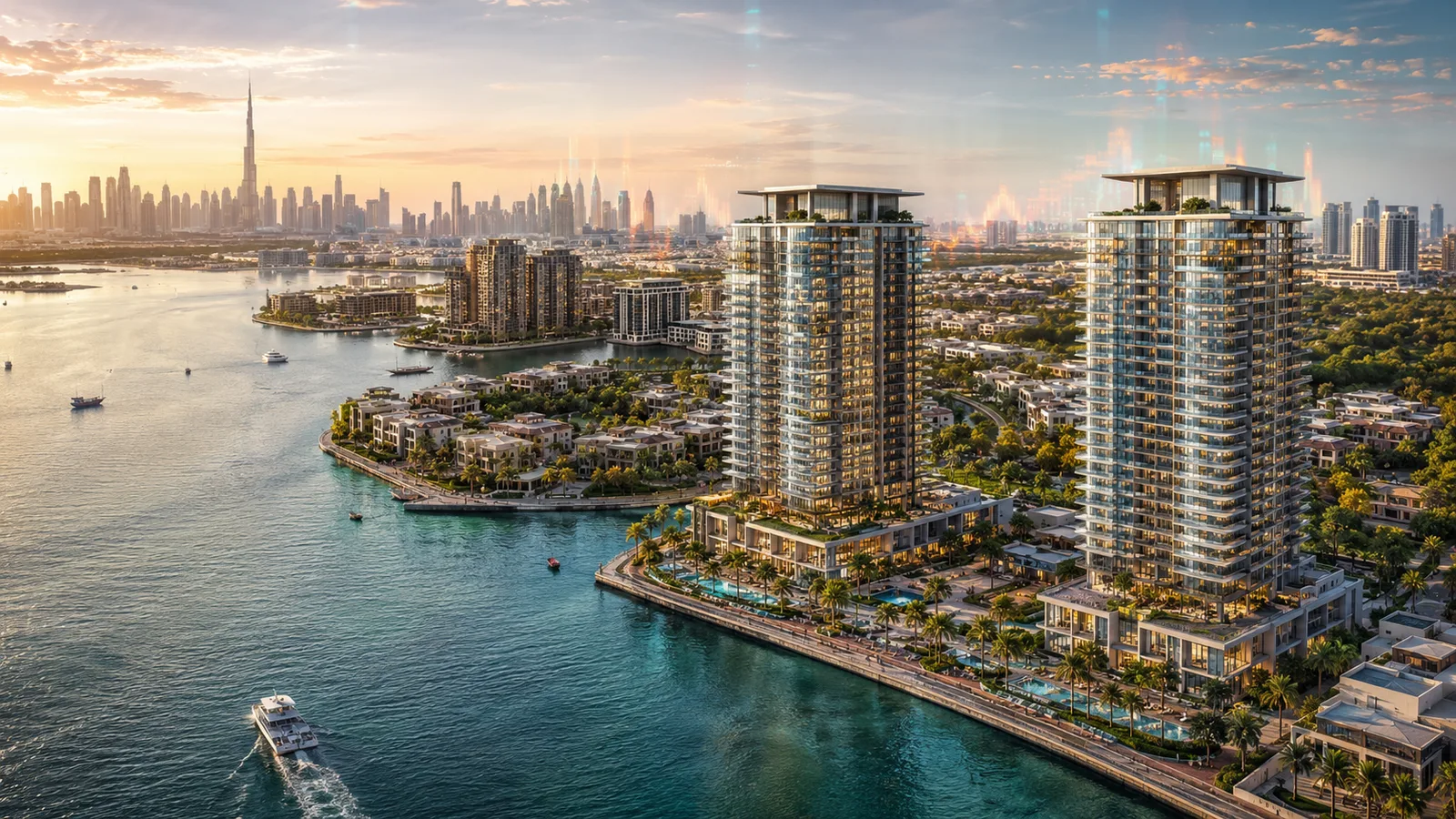
Global Partners Plans Two Marriott-Branded Residences Across More Than 127,000 Sq M at Dubai Creek
Global Partners is developing a Dubai Creek residential masterplan featuring Westin Residences and Renaissance Residences in collaboration with Marriott International. The wider project spans more than 127,000 square metres, with approximately 70% planned for landscaped gardens and open spaces.