

Dubai RTA Reviews Road and Public Transport Links to Al Maktoum International Airport
Transport planning for Dubai World Central and Dubai South places multimodal access at the centre of the airport’s wider development case.
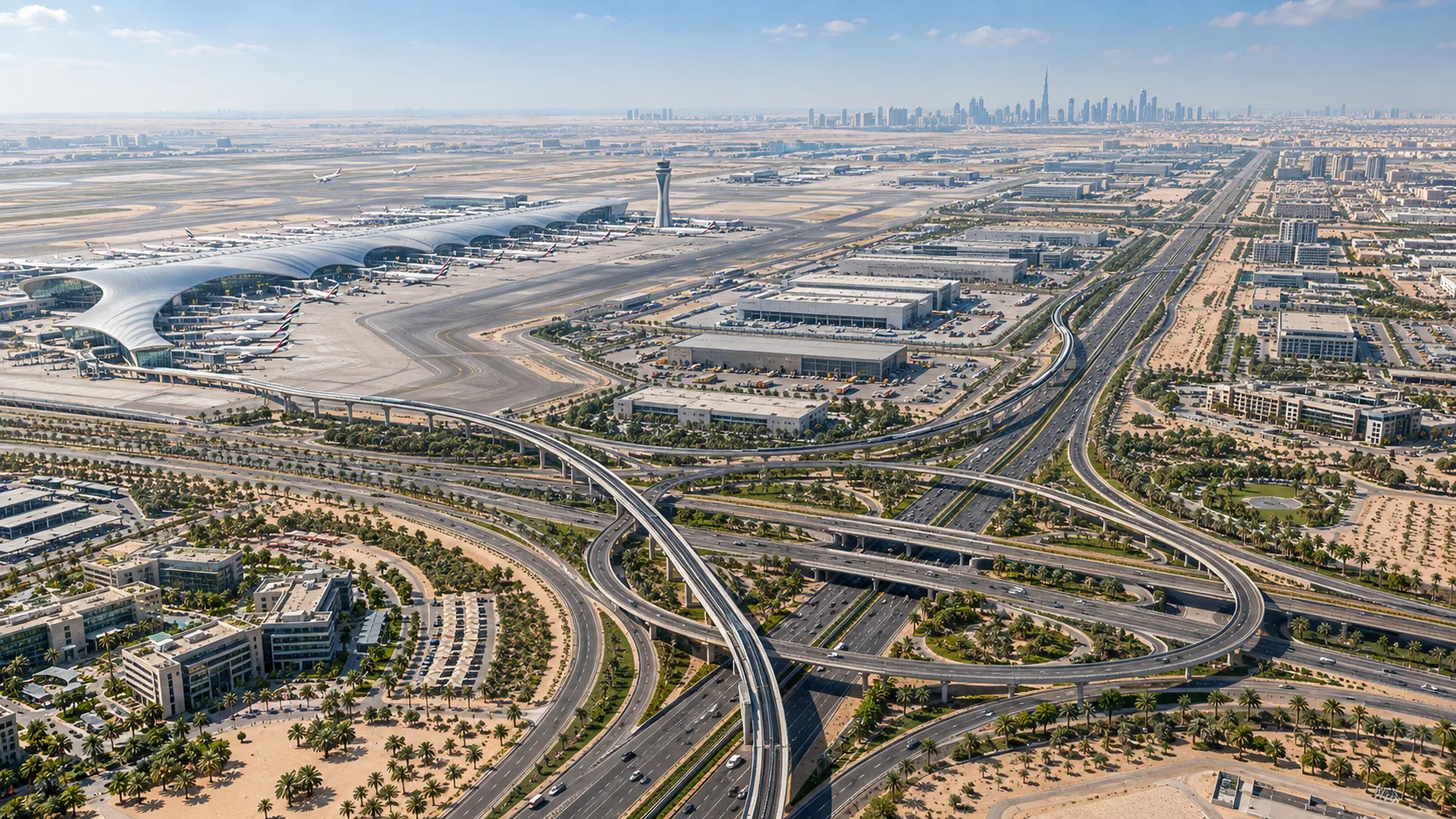
Dubai’s Roads and Transport Authority and Dubai Airports are reviewing future road and public transport projects serving Al Maktoum International Airport and Dubai South, reinforcing connectivity as a key factor in the area’s long-term development outlook.
What this means for investors
For investors assessing Dubai South and adjacent markets, the key issue is the relationship between planned connectivity and the maturity of individual assets.
Dubai’s Roads and Transport Authority is reviewing future road and public transport connections serving Dubai World Central – Al Maktoum International Airport and Dubai South in discussions with Dubai Airports. The focus on access from different parts of Dubai places transport connectivity alongside airport development as a material consideration for the emerging southern growth corridor.
Executive Summary
The discussions bring together RTA and Dubai Airports to consider traffic solutions around Dubai International Airport and longer-term transport planning for Al Maktoum International Airport and Dubai South. For Dubai South, the significance lies less in a completed infrastructure announcement than in the continued alignment of airport, road and public transport planning.
Al Maktoum International Airport is being planned with multimodal connectivity linking air, rail and road networks. If delivered through coordinated projects, that approach could strengthen the development case for surrounding commercial, logistics, residential and lifestyle uses. The timing and precise scope of individual connections, however, remain important variables.
Confirmed Development Facts
- RTA and Dubai Airports discussed traffic solutions around Dubai International Airport and future transport planning for Dubai World Central – Al Maktoum International Airport and Dubai South.
- The discussions covered future road and public transport projects intended to improve access to Al Maktoum International Airport and Dubai South from different parts of Dubai.
- The meeting involved Mattar Al Tayer, Director General and Chairman of the Board of Executive Directors of RTA, and Paul Griffiths, Chief Executive Officer of Dubai Airports.
- Al Maktoum International Airport is being planned with multimodal connectivity linking air, rail and road transport networks.
Market Significance
Transport planning can influence how quickly a large development zone becomes integrated into a city’s economic geography. In Dubai South, stronger connections could make the area more accessible to occupiers, employees, residents and investors, while potentially broadening the range of viable uses around the airport and its associated logistics activity.
The multimodal framework also matters because airport-led districts compete on more than runway capacity. Efficient road, rail and public transport links can support a broader ecosystem of offices, warehousing, hospitality, housing and supporting services. AlSafaqa’s view is that the current discussions represent a development-enabling signal, not evidence that all related projects have reached the delivery stage.
Investor Perspective
For investors assessing Dubai South and adjacent markets, the key issue is the relationship between planned connectivity and the maturity of individual assets. Locations that ultimately gain dependable links to the airport and wider Dubai may become more attractive to businesses requiring workforce access, freight movement or proximity to aviation infrastructure.
The opportunity set should nevertheless be assessed by submarket and use case. Logistics and industrial property may respond to network reliability, while residential and lifestyle projects will also depend on public transport convenience and established amenities. Route announcements, approvals, construction milestones and operating timelines will therefore be more informative than treating the review itself as a near-term valuation trigger.
Sources & methodology
How this report was built
This is an editorial analysis. It sets out our reading of the market rather than a computed dataset.
Data coverage
Any figures mentioned are attributed in the text to the source they came from.
Article scope
All property types
Transparency notes
The available information confirms discussions and planning intent, but does not confirm specific routes, project budgets, delivery dates, construction status or the timing of any individual road, rail or public transport scheme. No investment value, capacity figure or property-price impact was verified.
Related stories
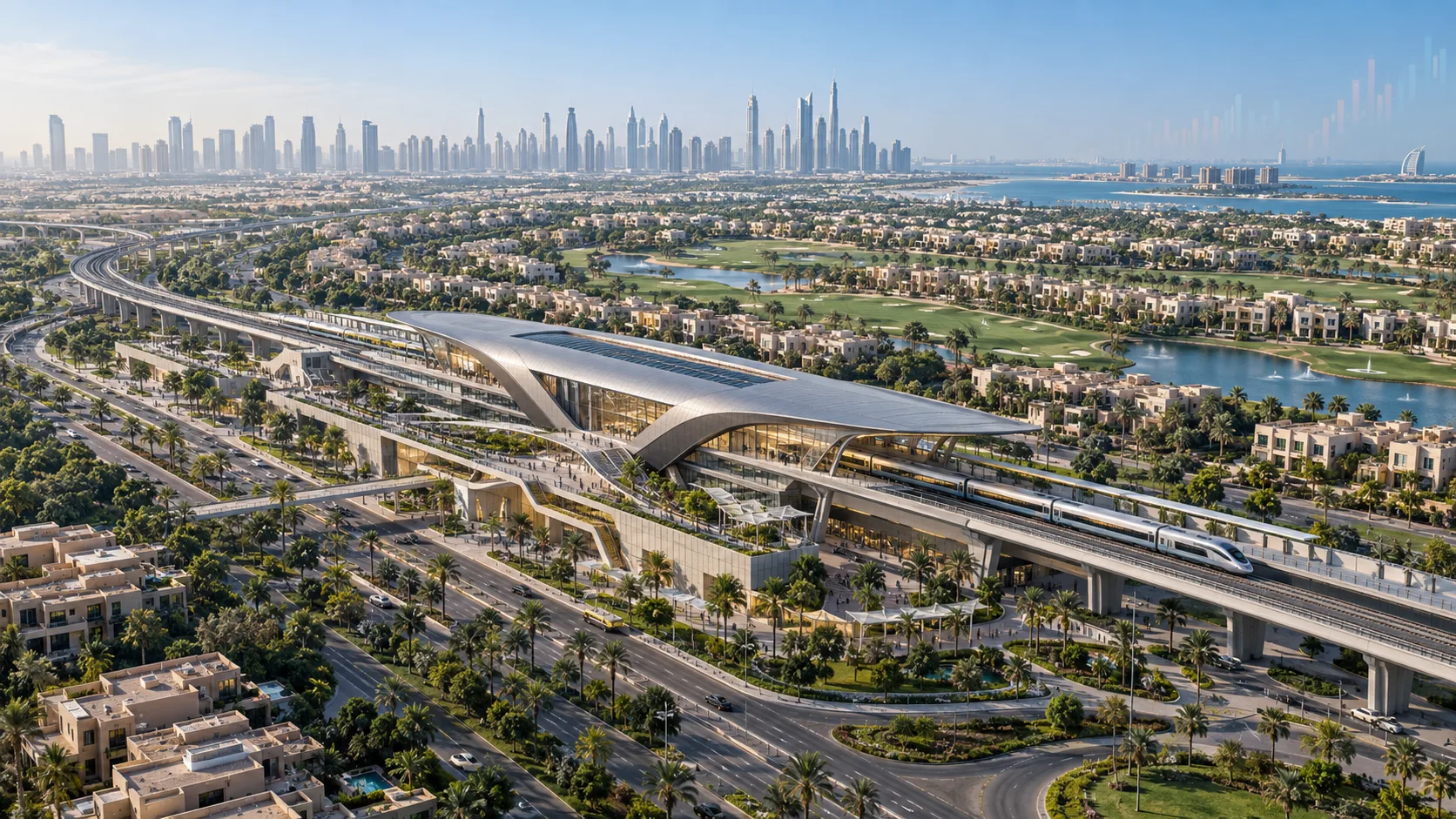
Etihad Rail Sets September 30, 2026 Opening for Dubai Passenger Station in Jumeirah Golf Estates
Etihad Rail has scheduled the opening of its Dubai passenger station in Jumeirah Golf Estates for September 30, 2026. The planned Abu Dhabi-Dubai-Fujairah connection adds a new intercity mobility layer with potential implications for accessibility, development activity and investment analysis around the station.
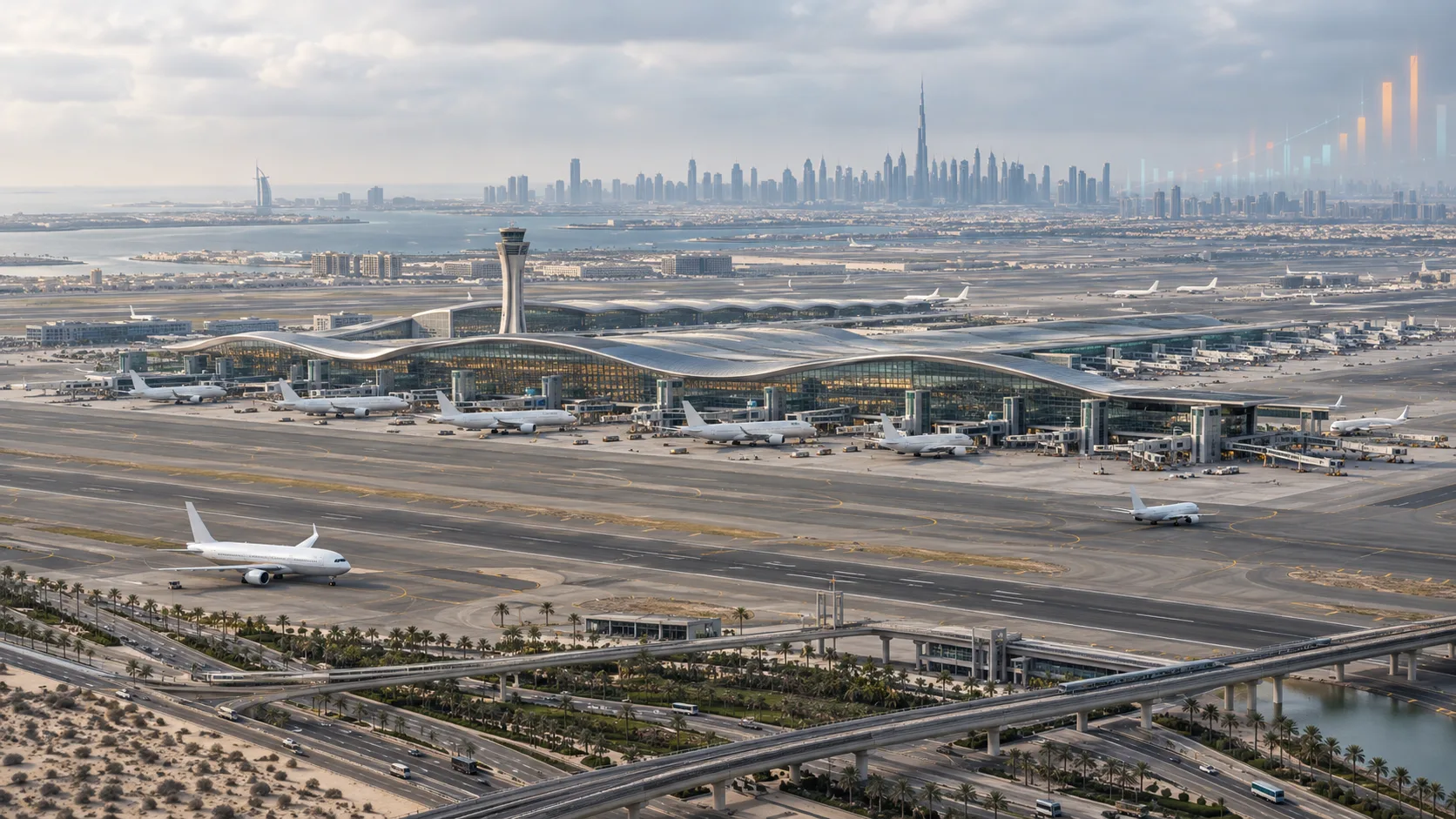
Al Maktoum International Airport Targets Queue-Free Security Ahead of 2032 Phase
Al Maktoum International Airport is being developed as Dubai’s future major aviation hub, with its first major phase targeted for operations in 2032. Its planned queue-free security model could strengthen Dubai South’s long-term appeal for hospitality, logistics and mixed-use investment.
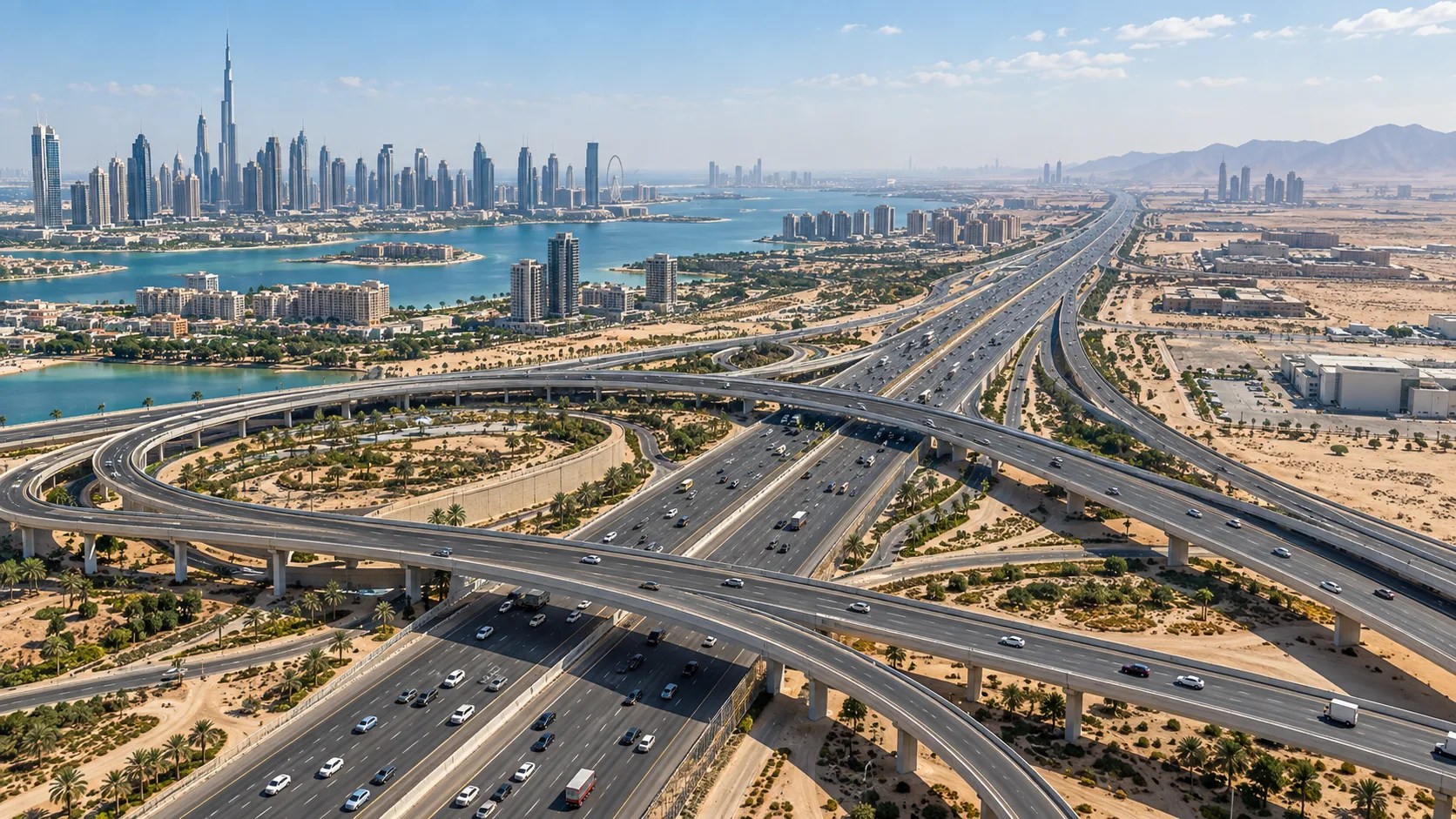
Dubai Approves Approximately 80-Kilometre Fourth Road Corridor with AED 3.5 Billion First Phase
Sheikh Hamdan bin Mohammed bin Rashid Al Maktoum has approved implementation of Dubai’s fourth strategic road corridor, an approximately 80-kilometre route featuring 12 lanes in both directions, 72 bridges and 17 tunnels. Its AED 3.5 billion first phase is expected to cut travel time between Al Shanouf Street and Dubai-Al Ain Road from 35 minutes to 14 minutes.
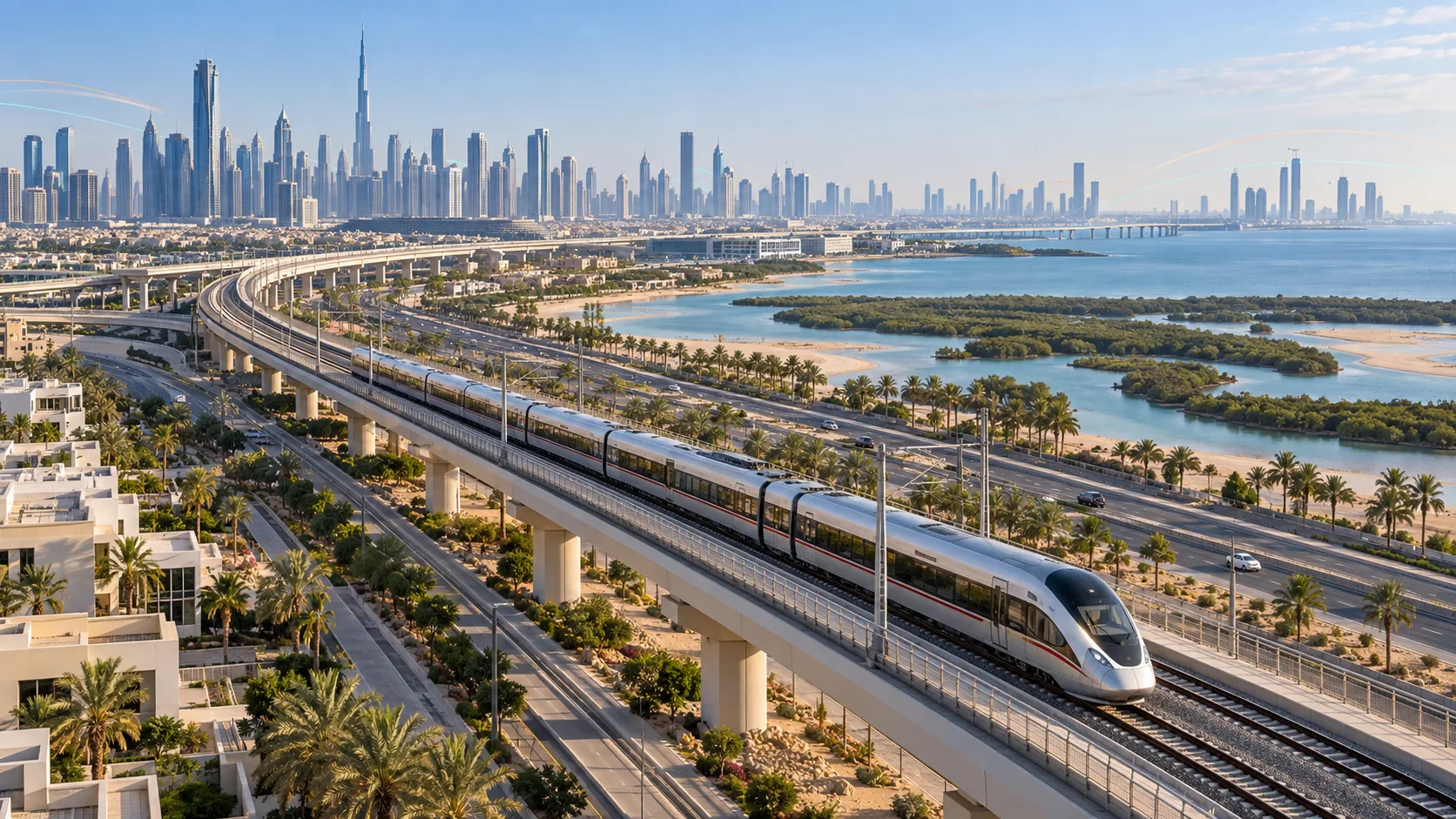
Etihad Rail Opens Dubai–Abu Dhabi Passenger Service
Etihad Rail’s Dubai–Abu Dhabi passenger link began on September 30, 2026. Its first reported journey connected Al Yalayis Station with Mohamed Bin Zayed City Station, marking an expansion of the UAE passenger network.