
Dubai International Airport Targets Around 70 Million Passengers in 2026 as Recovery Supports Airport-Area Investment
The revised outlook keeps Dubai’s aviation gateway central to hospitality, retail and commercial property strategies despite recent disruption.
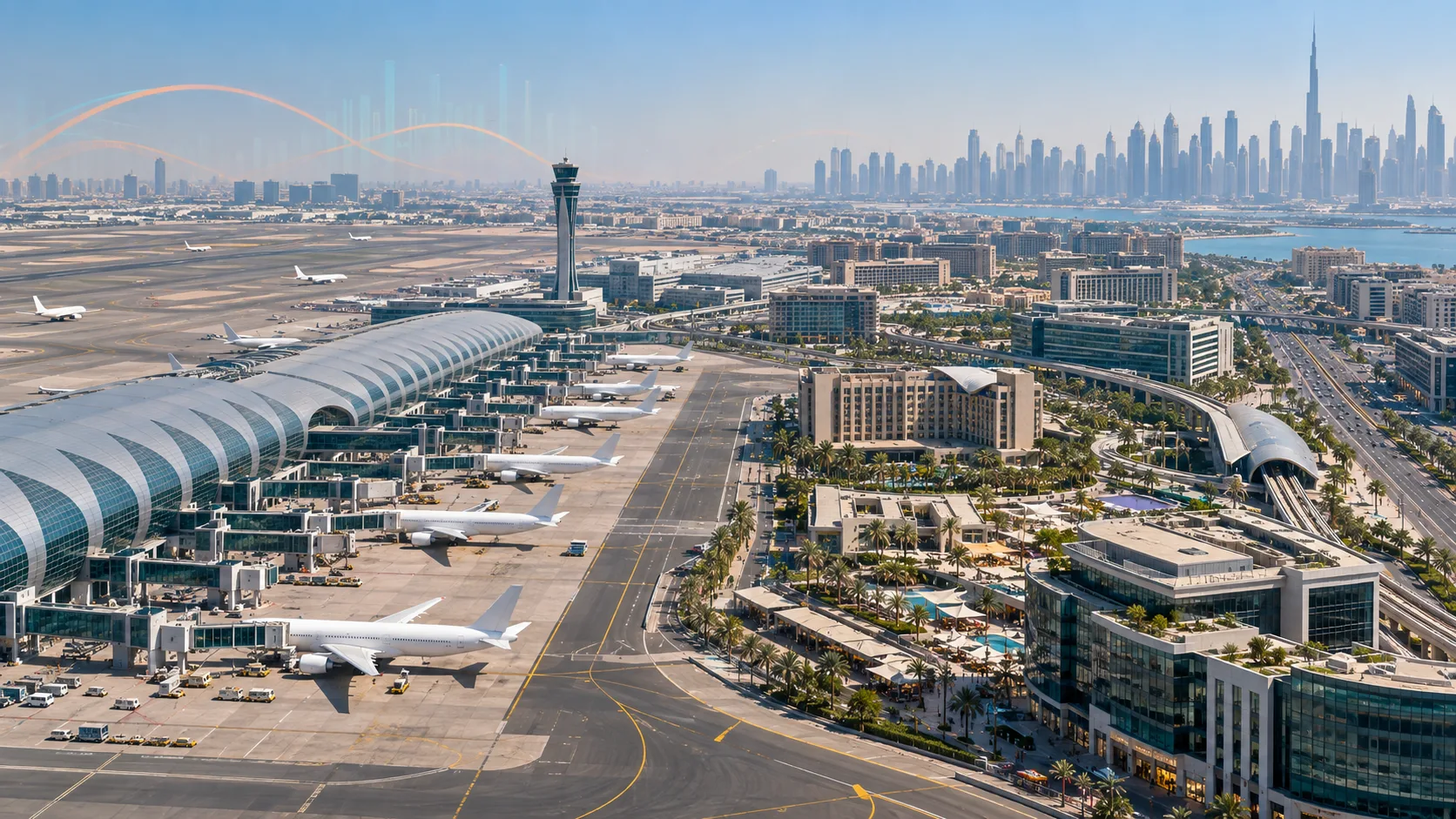
Dubai International Airport expects to handle around 70 million passengers in 2026 after regional disruption and UAE airspace restrictions reduced capacity and passenger volumes. With Dubai Airports also targeting 100 million annual passengers by the end of 2027, the forecast reinforces the airport’s importance to Dubai’s tourism and real-estate investment environment.
What this means for investors
For investors assessing Dubai exposure, the forecast strengthens the case for analysing airport-adjacent hospitality, retail and commercial districts as part of a connected ecosystem rather than as isolated property segments.
Dubai International Airport (DXB) expects to handle around 70 million passengers in 2026, restoring a substantial traffic outlook after regional disruption and UAE airspace restrictions reduced airport capacity and passenger volumes. The forecast places aviation connectivity at the centre of Dubai’s tourism, hospitality, retail and airport-area commercial investment story.
Executive Summary
Dubai’s revised passenger forecast indicates that the temporary interruption has not displaced the airport’s role as a major platform for the emirate’s visitor economy. For property and commercial investors, the outlook supports continued focus on locations and assets that can capture airport-linked demand, although passenger recovery alone does not establish performance for any individual project.
Confirmed Development Facts
- Dubai International Airport expects to handle around 70 million passengers during 2026.
- The revised forecast follows regional disruption and UAE airspace restrictions that reduced airport capacity and passenger volumes.
- DXB handled 31.5 million passengers in the first half of 2026.
- By that point, airport capacity had recovered to 84% of previous levels, while passenger volumes had recovered to 78%.
- Dubai Airports expects DXB to reach 100 million annual passengers by the end of 2027.
Market Significance
The figures keep Dubai’s aviation infrastructure relevant to a broader GCC investment thesis in which mobility, tourism and real estate reinforce one another. A forecast of around 70 million passengers represents a sizeable potential customer base for hotels, food and beverage operators, airport retail and business services. The 2027 target also points to a longer-term capacity narrative rather than a single-season recovery story.
The recovery pattern is equally important. Capacity had returned to 84% of previous levels, while passenger volumes had recovered to 78%, showing that operations and demand did not rebound in identical proportions during the first half of 2026. AlSafaqa’s assessment is that this distinction matters for investors: infrastructure readiness can improve before every demand-sensitive asset experiences equivalent commercial momentum.
Investor Perspective
For investors assessing Dubai exposure, the forecast strengthens the case for analysing airport-adjacent hospitality, retail and commercial districts as part of a connected ecosystem rather than as isolated property segments. Passenger throughput can improve visibility for these assets, but the investment question remains specific to location, access, operating model, tenant quality and the timing of actual demand recovery.
The expectation of 100 million annual passengers by the end of 2027 may also shape how developers and operators plan for future capacity. It can inform assumptions for assets positioned around travel flows, corporate mobility and short-stay demand. However, it remains a forward-looking infrastructure signal, not a guarantee of occupancy, rental growth or retail sales. Investors should compare the airport outlook with project-level delivery schedules and operating evidence before drawing conclusions.
Sources & methodology
How this report was built
This is an editorial analysis. It sets out our reading of the market rather than a computed dataset.
Data coverage
Any figures mentioned are attributed in the text to the source they came from.
Article scope
All property types
Transparency notes
The around 70 million passenger figure is a forecast, while the 100 million target is an expectation for the end of 2027. The available information does not confirm project-level property performance, hotel occupancy, retail revenue, transaction values or the effect of the airport outlook on specific surrounding developments.
Related stories
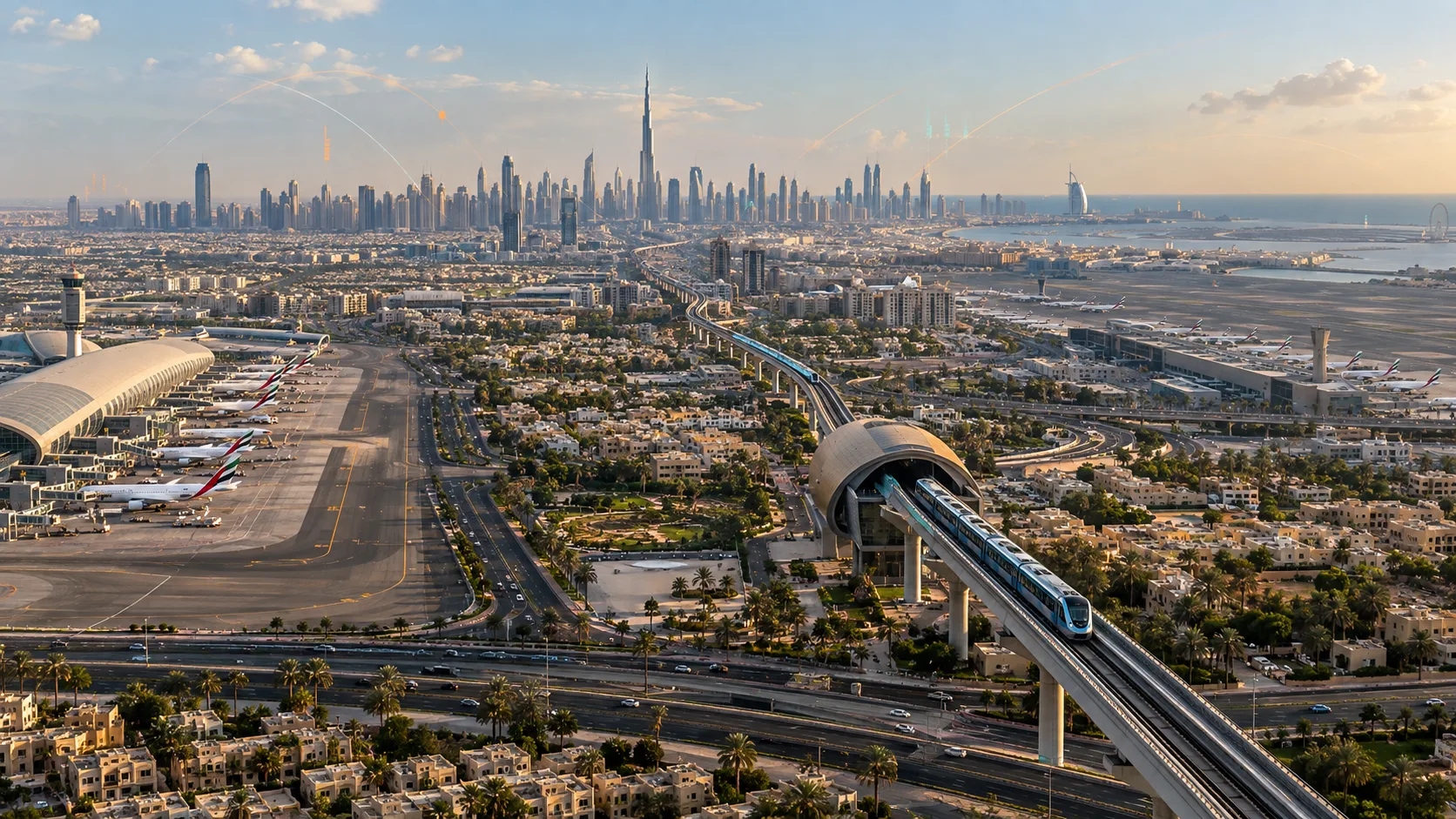
Dubai Studies DXB–DWC Metro Link as 30km Blue Line and AED34bn Gold Line Advance
Dubai has begun studying a potential Metro connection between Dubai International Airport and Al Maktoum International Airport, with the work expected to take about one year. The study comes as the 30-kilometre Blue Line is under construction and the AED34 billion Gold Line moves forward with an inauguration target of September 9, 2032.
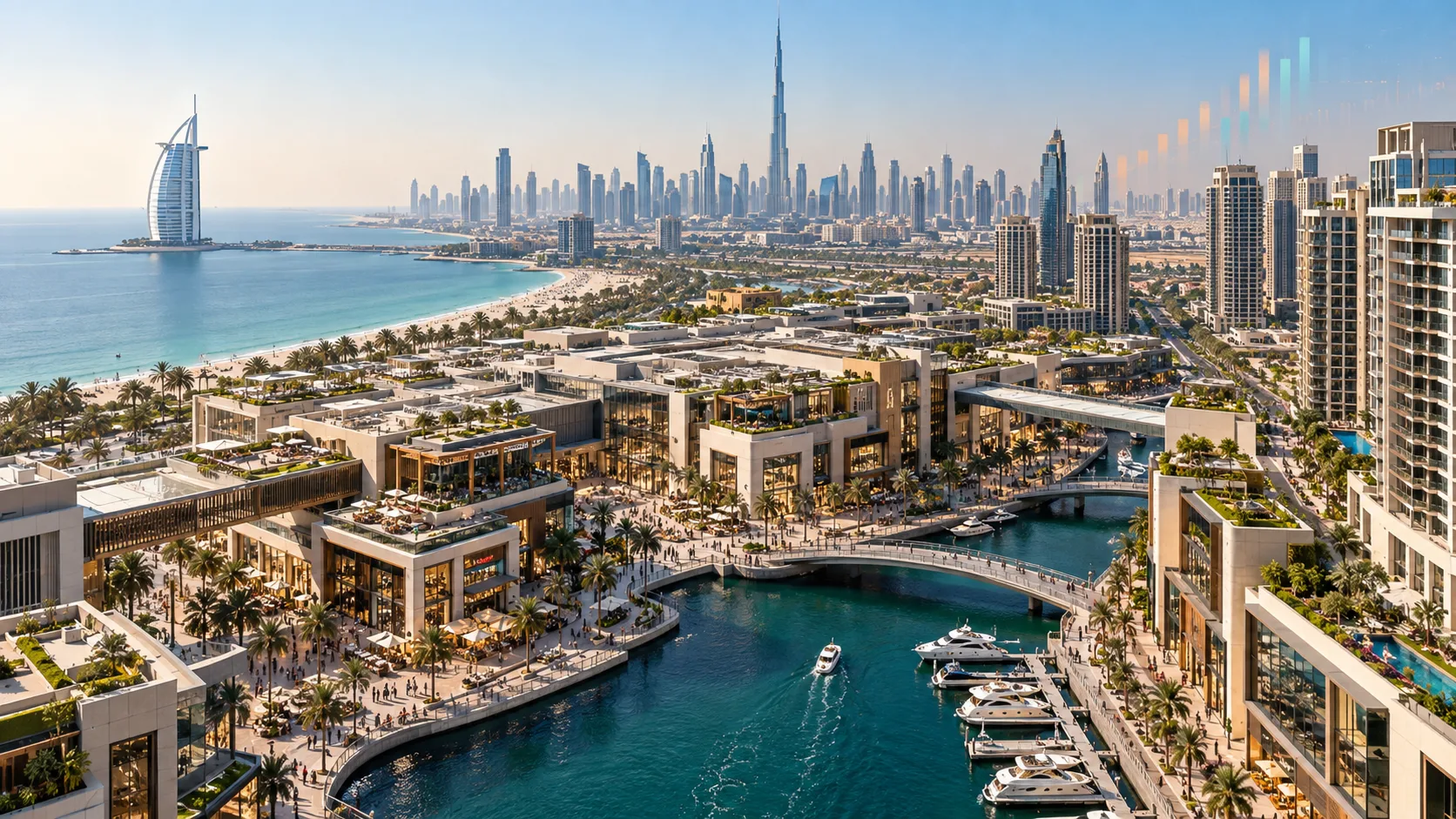
Dubai Retail Property Sales Rise 176.7% to AED3.8 Billion in H1 2026 as JVC Leads Off-Plan Activity
Dubai’s retail real-estate sales value reached AED3.8 billion in the first half of 2026, up 176.7% year-on-year. Off-plan retail premises represented nearly 60% of transactions and almost 70% of sales value, while Jumeirah Village Circle recorded more than 12% of off-plan retail transactions.
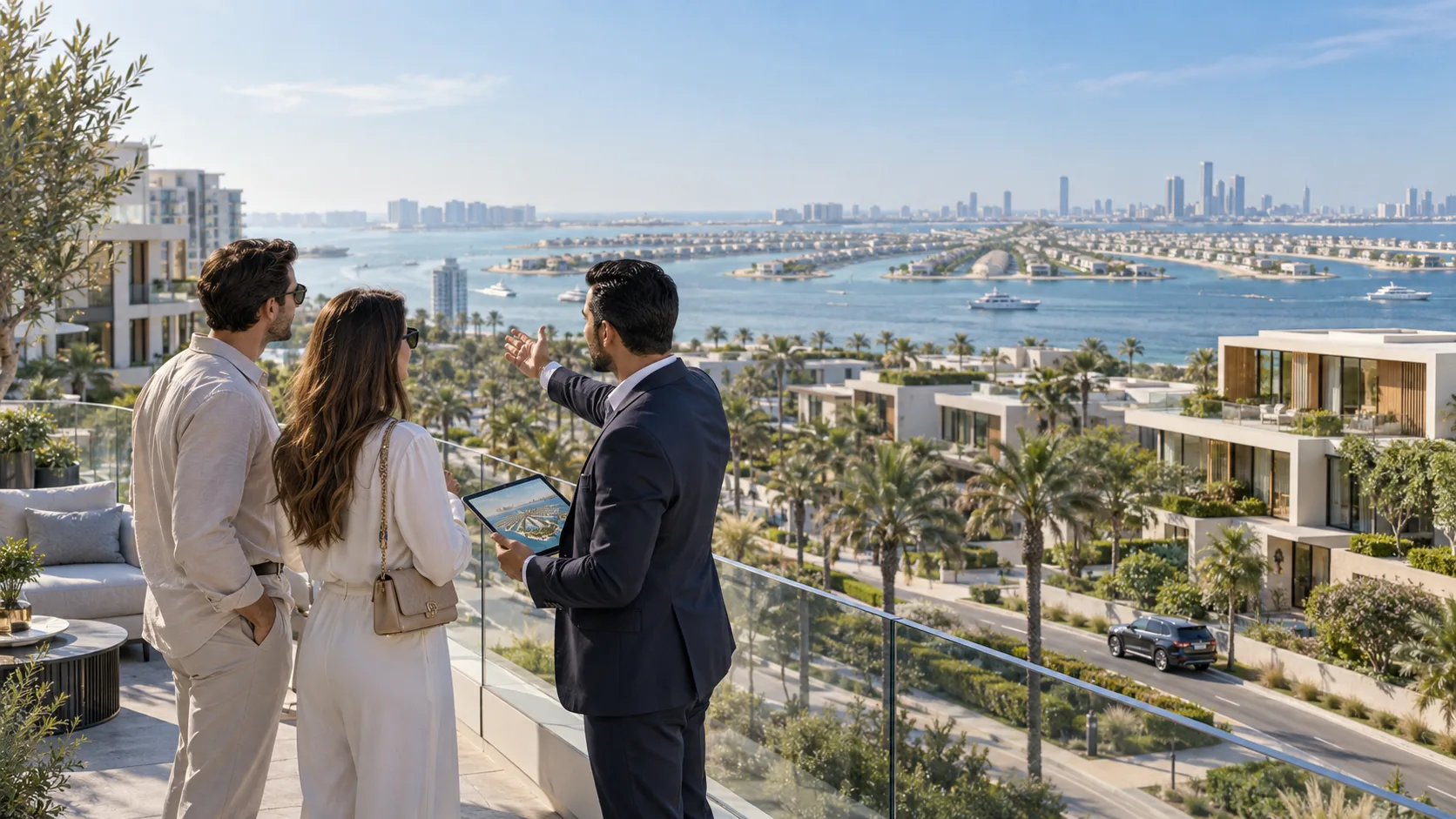
Dubai Holding and ADCB Offer 3.49% Financing for Palm Jebel Ali, The Acres and Nad Al Sheba Gardens
Dubai Holding Real Estate and Abu Dhabi Commercial Bank have partnered on off-plan home financing for selected Dubai developments, with advertised pricing starting at 3.49% per annum and fixed for three years.
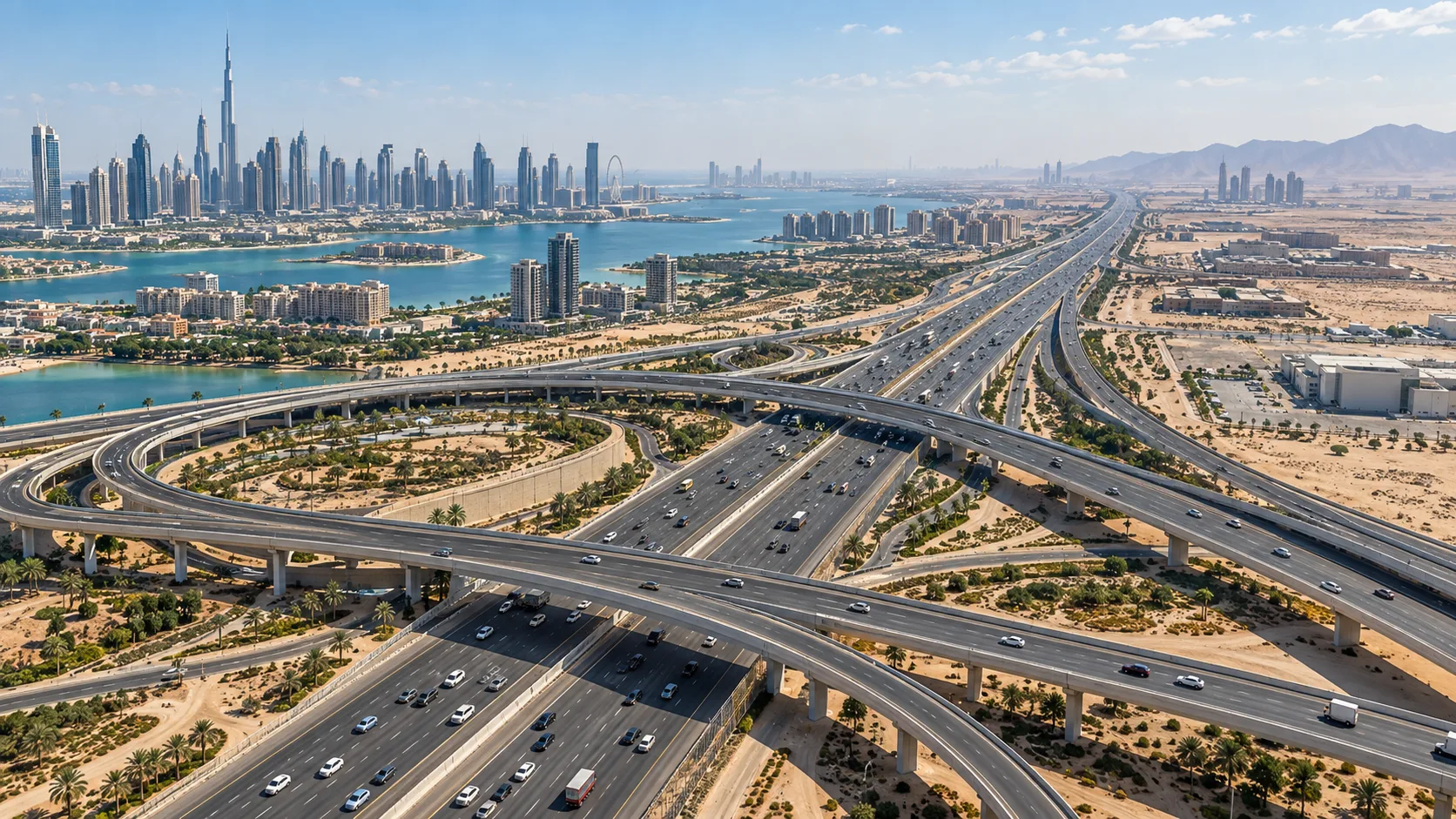
Dubai Approves Approximately 80-Kilometre Fourth Road Corridor with AED 3.5 Billion First Phase
Sheikh Hamdan bin Mohammed bin Rashid Al Maktoum has approved implementation of Dubai’s fourth strategic road corridor, an approximately 80-kilometre route featuring 12 lanes in both directions, 72 bridges and 17 tunnels. Its AED 3.5 billion first phase is expected to cut travel time between Al Shanouf Street and Dubai-Al Ain Road from 35 minutes to 14 minutes.