
Dubai Retail Rents Rise 5.9% to AED 252 per Square Foot in H1 2026
Engel & Völkers data points to continued strength in Dubai’s retail leasing market, with renewed-contract rents recording the sharper increase.
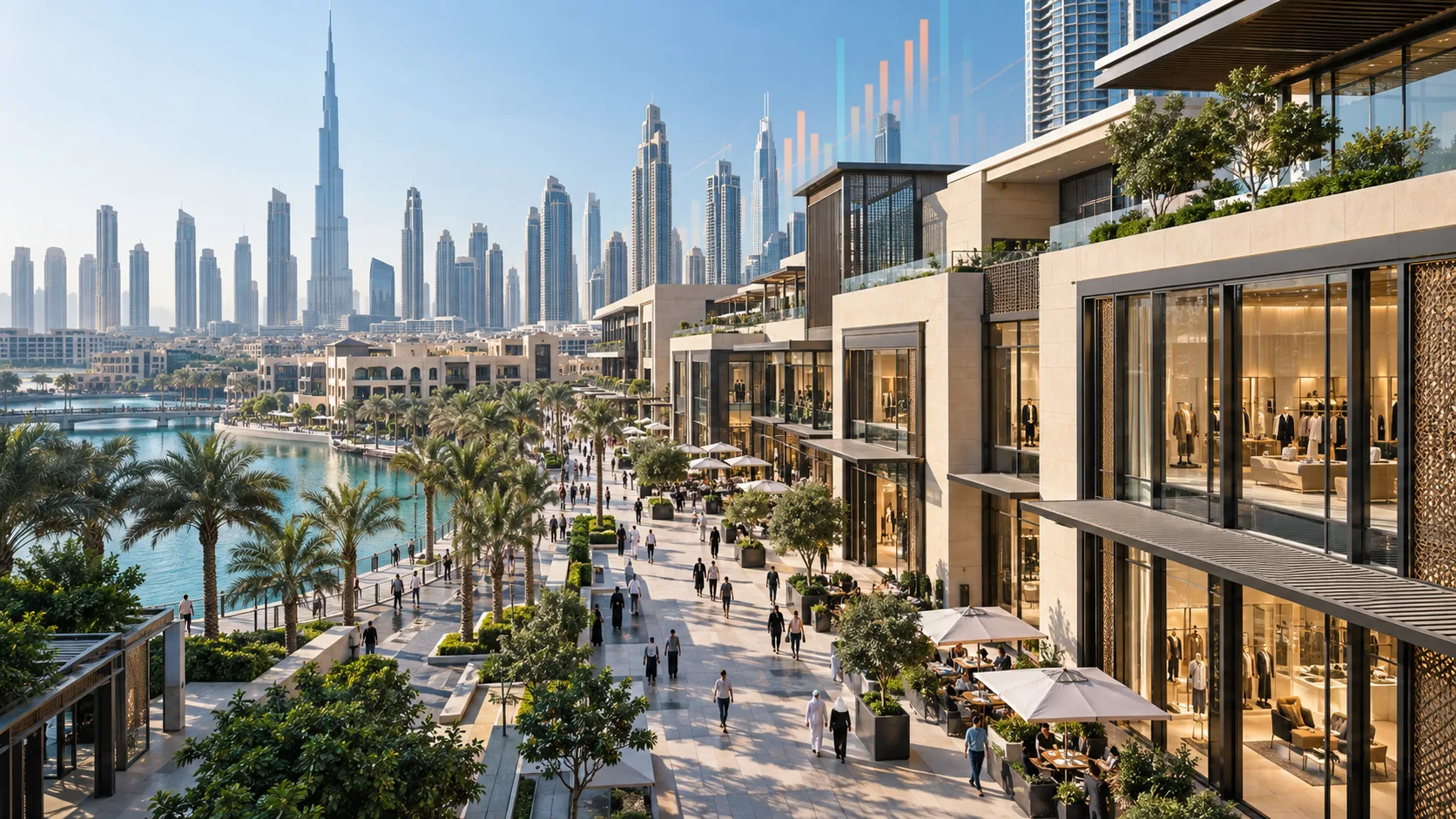
Dubai retail property rents increased 5.9% year on year during the first half of 2026, moving from AED 238 to AED 252 per square foot. The performance reinforces the importance of location, leasing quality and tenant retention for owners and investors assessing the emirate’s retail assets.
What this means for investors
AlSafaqa readers assessing Dubai retail exposure should view the increase as a market signal rather than a standalone valuation conclusion.
Dubai retail property rents rose 5.9% year on year in the first half of 2026, increasing from AED 238 to AED 252 per square foot, according to figures attributed to Engel & Völkers Middle East. The rise keeps retail leasing in focus as landlords, investors and developers assess the income potential of established and repositioned shopping destinations.
Executive Summary
The H1 2026 increase indicates that Dubai’s retail property market retained pricing strength as commercial leasing activity remained strong. Renewed-contract rents rose 6.6%, compared with a 2.2% increase for new contracts, highlighting a clear difference between retaining existing occupiers and signing fresh leases.
Key Facts
- Dubai retail property rents rose 5.9% year on year during the first half of 2026.
- The reported average increased from AED 238 to AED 252 per square foot.
- New-contract rents rose 2.2% during H1 2026.
- Renewed-contract rents rose 6.6% over the same period.
- The figures are attributed to Engel & Völkers Middle East.
- Engel & Völkers’ H1 2026 Dubai commercial-market report confirms that retail rents increased year on year and that commercial leasing activity remained strong during the first half of 2026.
Market Significance
For Dubai’s wider commercial property market, the rent movement underlines the importance of examining both headline pricing and leasing composition. The gap between renewed- and new-contract growth suggests that existing tenant relationships may be an important element of current income resilience, although the figures alone do not establish the reasons behind individual leasing decisions.
The data also has implications for development economics. Higher rents can improve the potential income profile of well-located retail space, while the stronger renewal figure highlights the importance of tenant retention and operational execution. For mall owners and developers, this may support closer attention to tenant mix, experience-led concepts and asset repositioning, while leaving occupancy costs and future supply assumptions to be assessed separately.
Investor Perspective
AlSafaqa readers assessing Dubai retail exposure should view the increase as a market signal rather than a standalone valuation conclusion. The rent level provides evidence of pricing momentum, while the contract split offers a practical basis for comparing assets with stable incumbent tenants against properties that rely more heavily on new leasing activity.
The trend may be most relevant when reviewing income-producing malls, community retail and other shopping destinations where location and recurring footfall support leasing performance. Investors can use the H1 figures as a reference point for scenario testing, including whether projected rents remain achievable under different renewal, vacancy and tenant-cost assumptions. The available data supports closer scrutiny of retail income resilience, not a blanket investment recommendation.
Sources & methodology
How this report was built
This is an editorial analysis. It sets out our reading of the market rather than a computed dataset.
Data coverage
Any figures mentioned are attributed in the text to the source they came from.
Article scope
All property types
Transparency notes
The AED 238, AED 252, 5.9%, 2.2% and 6.6% figures are reported as Engel & Völkers Middle East data. The independent confirmation in the fact package supports the year-on-year retail-rent increase and strong leasing activity, but does not separately restate every detailed numeric figure or provide an asset-level breakdown.
Related stories
Dubai Residential Prices Fall 1.7% in August 2026 as Sales Value Reaches Approximately AED 23.4 Billion
Dubai’s average residential sales price fell 1.7% year-on-year in August 2026 to approximately AED 1,636 per square foot, while residential transactions reached approximately AED 23.4 billion for the month.

Emaar Founder Mohamed Alabbar Sees Approximately 5% to 10% Dubai Property Price Adjustment by 2027
Mohamed Alabbar, founder of Emaar Properties, said Dubai property prices could adjust by approximately 5% to 10% as significant new supply enters the market by 2027. The outlook gives developers, investors and buyers a market-timing signal as the emirate prepares for a potentially broader inventory cycle.
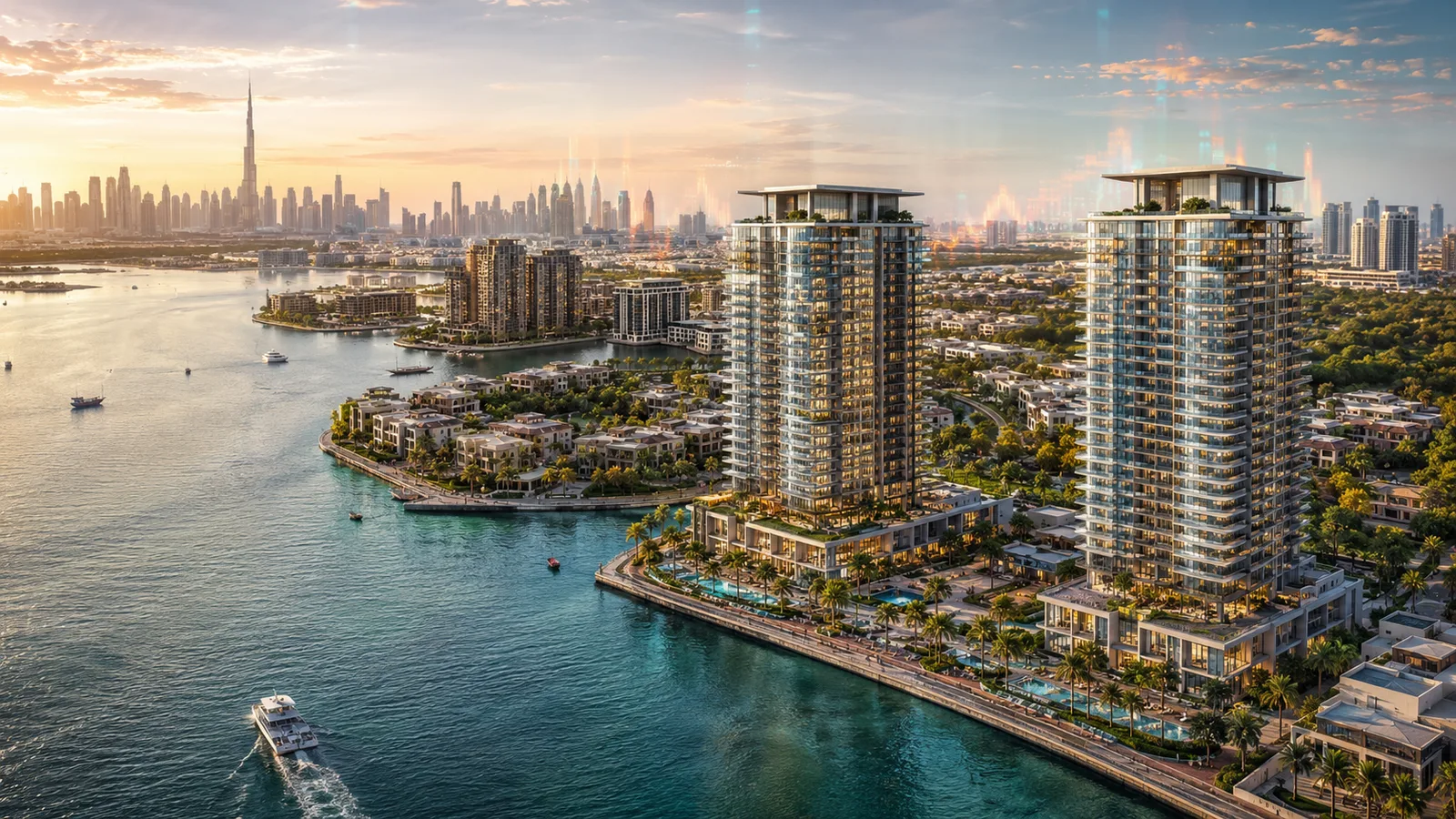
Global Partners Plans Two Marriott-Branded Residences Across More Than 127,000 Sq M at Dubai Creek
Global Partners is developing a Dubai Creek residential masterplan featuring Westin Residences and Renaissance Residences in collaboration with Marriott International. The wider project spans more than 127,000 square metres, with approximately 70% planned for landscaped gardens and open spaces.

Dubai Residential Sales Reach Approximately AED 26.5 Billion in July 2026
Dubai recorded AED 26.45 billion in residential property sales across 13,397 transactions in July 2026. Monthly growth remained positive, while off-plan transactions represented 72.2% of activity and 66.0% of sales value.