
Frozen evidence reports market activity within the reporting window.
Dubai Removes Minimum Property Value for Two-Year Investor Residence Visa
The policy broadens access to Dubai’s property-linked residency route while preserving the AED 2 million threshold for the ten-year Golden Visa.

Dubai Land Department now states that individual property owners may apply for a two-year property-linked residence visa regardless of property value. The rule does not change the AED 2 million real-estate requirement for Dubai’s ten-year Golden Visa.
Dubai Land Department has confirmed that an individual property owner can apply for a two-year property-linked residence visa regardless of the property’s value. The change puts Dubai’s entry-level property market more clearly in view for residency-led investment decisions, while the separate AED 2 million threshold for the ten-year real-estate Golden Visa remains unchanged.
Executive Summary
The policy applies to the two-year property investor residence visa and removes the minimum property-value requirement for sole owners. It may broaden the pool of international buyers considering Dubai property for both ownership and residency, while preserving a clear distinction between the short-term property-linked route and the long-term Golden Visa.
Confirmed Policy Details
- Dubai Land Department states that an individual property owner can apply for a two-year property-linked residence visa regardless of the property’s value.
- DLD Cube describes the route as a two-year residence visa for property owners and confirms that sole owners face no minimum property-value requirement.
- For jointly owned property, each co-owner must hold a share valued at no less than AED 400,000.
- The change applies to the two-year property investor residence visa and does not remove the AED 2 million threshold for the ten-year real-estate Golden Visa.
Market Significance
The policy changes the role residency can play in Dubai’s lower-value property segment. Buyers assessing property partly through an immigration lens no longer need to focus only on assets meeting a defined value threshold for this two-year route. A broader range of apartments and other qualifying ownership interests may therefore enter that consideration set.
Residency can add practical value to ownership beyond rental yield or capital appreciation. The change may support demand from buyers seeking a base in Dubai, particularly when the objective is access to the city rather than qualification for the longest-duration residency category. The distinction between the two visa routes also preserves segmentation across Dubai’s investment market: lower-value ownership may serve an access and residency function, while higher-value purchases remain relevant to Golden Visa eligibility.
Investor Perspective
For investors assessing GCC real estate exposure, the change strengthens Dubai’s proposition at the entry point. The comparison is no longer limited to price, rent, or location; residency access becomes an additional consideration for sole owners. This may increase attention on completed and lower-ticket units, where an ownership decision can combine personal use, rental potential, and eligibility for two-year residency.
The rule for jointly owned property creates a separate underwriting consideration. Co-investors cannot assume that a shared purchase automatically provides eligibility: each owner’s share must reach AED 400,000. Buyers should therefore review the title structure, individual ownership shares, and specific application requirements before including residency in an investment case. The policy is a demand signal, not a standalone reason to buy; asset quality, liquidity, service charges, rental performance, and exit depth remain central to the decision.
Data & Transparency Notes
The available material confirms the eligibility rules and the distinction between the two visa durations, but it does not establish the resulting effect on transaction volumes, foreign-buyer demand, pricing, or rental performance. Those market outcomes remain analytical possibilities rather than confirmed results.
Editorial transparency
How this report was built
This article uses a frozen publication-time snapshot, so charts and evidence remain stable even as live analytics change.
Data coverage
Figures are sourced from official real-estate transaction records and fact-checked before publication.
Related stories
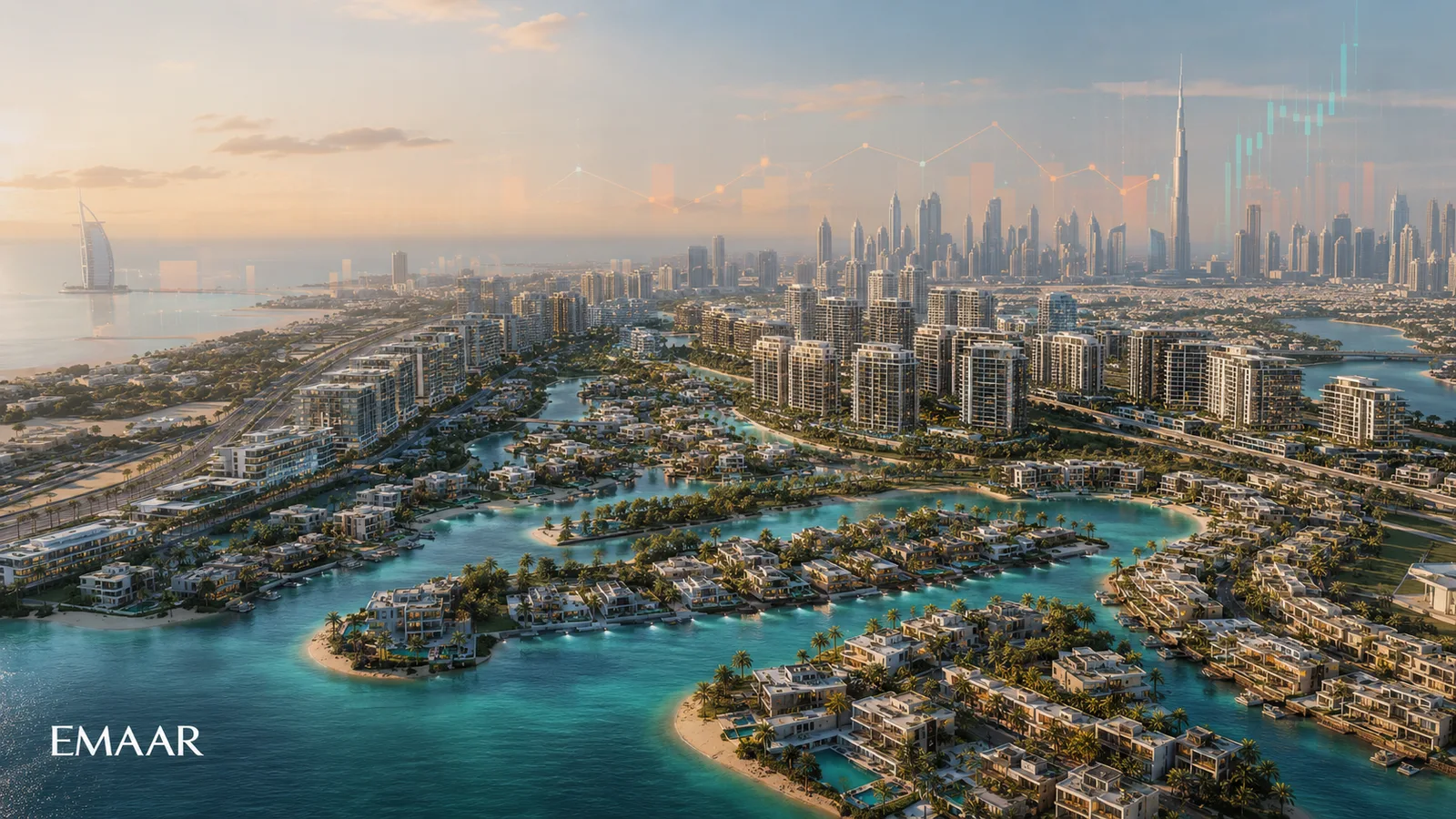
Emaar Plans AED 200B Dubai Masterplan for Nearly 150,000 Residents
Emaar Properties has announced plans for a landmark AED 200 billion, approximately US$55 billion, master-planned development in the heart of Dubai. The project is expected to exceed 4.5 million square metres of built-up area and accommodate nearly 150,000 residents, positioning it as one of the most significant additions to the emirate’s future real-estate pipeline.
May–July 2026
Al Thanyah Fifth: 19 listed projects, prices from AED 1.8m and 1,512 recorded transactions
Helps a buyer or agent judge what is actually available in Al Thanyah Fifth and at what recorded price level.

June 2026
ELTIERA VIEWS vs AZIZI VENICE 14: value concentration meets transaction breadth in June 2026
June’s project table puts ELTIERA VIEWS and AZIZI VENICE 14 side by side on transaction value, with ELTIERA VIEWS recording AED 698.6M across 254 unit and villa transactions and AZIZI VENICE 14 posting AED 557.7M across 731. The comparison is useful because the two projects show very different count-and-value profiles, while the remaining metrics in this slice are not part of the project comparison.

June 2026
AZIZI Developments leads Dubai developers by transaction value in June 2026
AZIZI Developments recorded the highest transaction value among Dubai developers in June 2026, supported by 3,775 unit and villa transactions worth AED 3.24B. The ranking visual also points to a pronounced spread between value and count across the leading developers, with AZIZI combining the largest total value in the table and a mid-range median value of AED 670,000.